In a nutshell
- 💄 Mechanism: A micro-thin film of Vaseline (white petrolatum) creates a hydrophobic barrier on teeth and the inner lip rim, repelling pigments to stop transfer and feathering while staying invisible.
- 🧴 Application: Use a pinhead-sized amount on the front teeth, blot excess, then lightly touch the inner rim; outline with a clear or matching liner, apply lipstick, blot, and re-layer—keep it ultra-light with liquid mattes.
- 🔁 Alternatives and combos: Combine the teeth barrier with clear wax lip liner, a silicone lip primer, or translucent powder; strategy: barrier inside, liner at the border, then set for maximum wear.
- 🧼 Safety & hygiene: Cosmetic-grade white petrolatum (USP) is inert; apply a micro-layer, decant with a spatula/cotton bud, avoid perfumed/tinted balms, and take care with veneers or retainers.
- ✅ Results: Delivers a near-invisible barrier that keeps enamel clear and lip edges crisp—fast, inexpensive, and camera-safe—so long as you use a film, not a coat.
It sounds like a backstage myth, yet putting a whisper of Vaseline on your teeth can genuinely stop your lipstick from wandering. The trick relies on a scientific sleight of hand: petroleum jelly forms an ultra-thin, hydrophobic barrier that repels pigments and waxes before they have a chance to smear or cling. Applied strategically, this film keeps colour off enamel and steadies the edges of a bold lip, lending a clean, editorial finish. Used correctly, the barrier is invisible, weightless, and undetectable in photos or under studio lights. Here’s how it works, why it’s safe, and when to use it instead of (or alongside) liners and primers for a bulletproof lipstick look.
Why Vaseline Works as a Lipstick Barrier
Vaseline—cosmetic-grade white petrolatum—is a blend of long-chain hydrocarbons that sits on surfaces rather than soaking in. That property creates an occlusive film with low surface energy, meaning lipstick molecules struggle to wet and grip it. On the teeth, this film behaves like a slick “non-stick” layer: colour that migrates inward is deflected, so it cannot latch onto enamel or build up along the gum line. Because the layer is microscopically thin, it refracts light similarly to saliva and enamel, so it doesn’t show up as a glossy patch or haze.
At the lip’s inner rim, a dot of petroleum jelly interrupts the capillary action that pulls creamy lipstick into fine lines and the corners of the mouth. Think of it as a moat that halts creeping pigments. The jelly’s thixotropic texture also softens friction from teeth and tongue, reducing the micro-smudging that happens as you talk. The result is less feathering, fewer touch-ups, and richer colour that stays where you placed it.
How to Apply: A Makeup Artist’s Step-By-Step
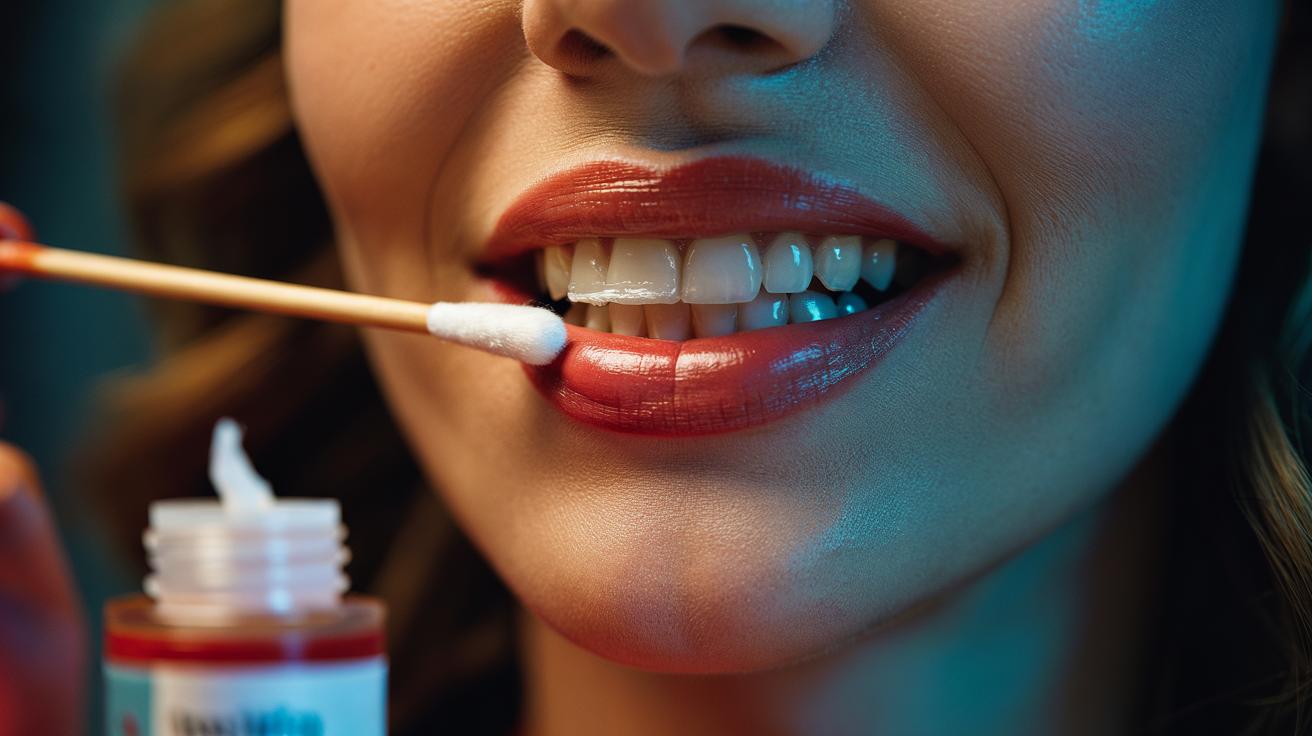
Start with clean teeth and dry lips. Scoop a pinhead-sized amount of Vaseline using a cotton bud, spatula, or a clean fingertip. Buff the tiniest veil across the front teeth—usually the top four to six incisors—aiming for glossy slip, not a visible layer. Blot once with tissue to remove excess. If you can feel thickness or taste product, you’ve used too much. Next, touch what’s left on the applicator to the inner edge of your lower lip where colour tends to migrate; do not coat the outer lip line.
Prime as you usually would: outline with a clear or matching lip liner, fill in lightly for grip, then apply lipstick. Press lips to a tissue, re-layer, and re-check the inner rim. For liquid mattes, keep the jelly minimal; they need dry surfaces to set. For creamy bullets or satins, the barrier is especially helpful during long events or on-camera work. Carry cotton buds to refresh the teeth film after meals, keeping the layer feather-light to preserve that invisible finish.
Alternatives and When to Choose Each
The Vaseline trick excels when you need a discreet fix that prevents inner-mouth transfer and keeps edges crisp without changing the lipstick’s finish. It pairs well with liners and setting techniques for big nights, heatwaves, or long shoots. If you prefer a single-step solution, a silicone-based primer or a clear wax liner can form a perimeter wall around the lips, while translucent powder locking boosts longevity. Match the tool to the formula: creamy lipsticks creep; true mattes crack if over-powdered.
| Method | What It Does | Best For | Watch-outs |
|---|---|---|---|
| Vaseline on teeth | Repels colour from enamel | Red, berry, bridal, TV | Use a micro-layer only |
| Vaseline at inner rim | Stops inward feathering | Cream/satin bullets | May soften liquid matte set |
| Clear wax lip liner | Seals edge against bleed | All finishes | Can feel waxy if overused |
| Silicone lip primer | Blurs and grips colour | Uneven texture, lines | May pill with heavy balms |
| Translucent powder | Locks layers, mattifies | Longevity on bullets | Can dull vibrancy |
Mix-and-match smartly: barrier inside, liner at the border, then set. If time is short, the teeth film alone will stop the tell-tale lipstick-on-teeth surprise while keeping your smile bright.
Safety, Hygiene, and Common Misconceptions
Cosmetic-grade white petrolatum (USP) is inert, fragrance-free, and widely used on lips and wounds as an occlusive moisturiser. In the tiny quantities used for this trick, incidental ingestion is minimal. That said, keep the layer extremely thin and avoid perfumed or tinted balms on teeth. If you have dental appliances, veneers, or retainers, patch-test cautiously and consult your dentist. Rare contact sensitivities can occur; discontinue if irritation appears around the mouth.
Hygiene matters. Decant the product with a spatula, not a fingertip dipped repeatedly into the jar. Replace cotton buds between steps to avoid contaminating the pot with lipstick. Petroleum jelly doesn’t bleach or brighten teeth—it simply prevents colour from sticking—so keep expectations realistic. Those prone to perioral dermatitis should keep the barrier restricted to the teeth and inner lip rim. For events with intense heat or close-up lights, combine the technique with liner and a setting step to maximise wear.
Used with a light hand, Vaseline on the teeth is a classic industry fix that creates a near-invisible barrier, preserving crisp lip lines and keeping enamel clear of stains. It’s fast, inexpensive, and compatible with most lipstick formulas when applied precisely. The secret is restraint: a film, not a coat. From red-carpet moments to everyday commutes, it offers insurance against feathering and awkward colour transfer without changing your finish. Will you adopt the teeth film alone, or pair it with liner and a setting step to build your own custom-proof lip routine?
Did you like it?4.5/5 (22)