In a nutshell
- ❄️ Cold triggers vasoconstriction, slowing capillary bleeding and inflammation so a hickey looks smaller and less tender sooner—helpful but not a magic eraser.
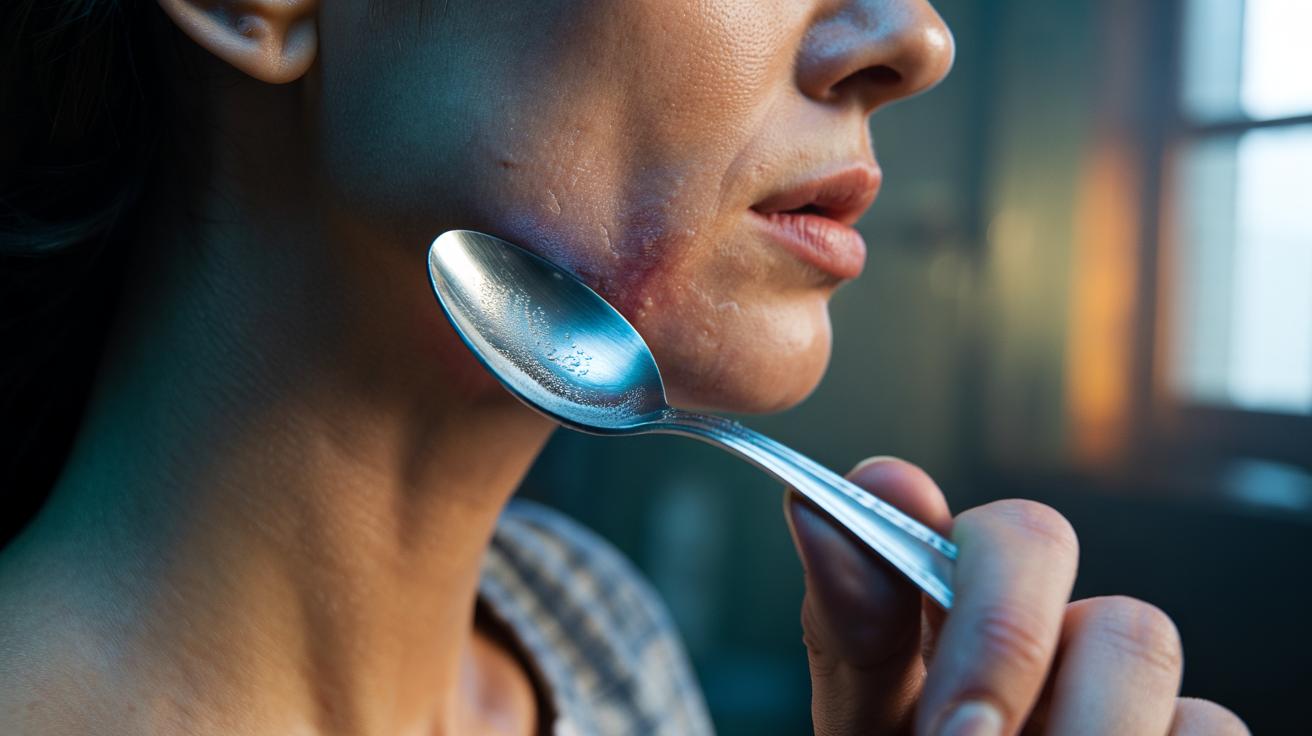
- 🥄 Technique: chill a clean metal spoon, press gently 5–10 minutes, rest 5, repeat up to three cycles; don’t rub or scrape, and switch to a warm compress after 24–48 hours.
- 🧪 Evidence: no RCTs on spoons, but sports medicine and bruise management back early cold and later warmth; expect faster fade in prominence, not instant disappearance.
- 🚫 Myths vs. fixes: skip toothpaste, coin-scraping, or suction gadgets; consider arnica/vitamin K gels (modest benefit) and gentle care; be cautious if on anticoagulants.
- 🎨 Cover-up plan: after cooling, use targeted colour correction and light concealer layers, set with powder, and lean on high collars or scarves for discreet camouflage.
Social media swears by the cold spoon trick: press a chilled teaspoon on a fresh hickey and watch it fade before lunch. The reality is less miraculous yet genuinely useful. A hickey is a small bruise—burst capillaries leaking blood under the skin—and quick cooling can slow that seepage. Used correctly, cold reduces swelling, dulls tenderness and limits the halo of discolouration, helping the mark look smaller, sooner. It won’t erase a bruise on command, but understanding how temperature affects blood vessels and tissue can make the difference between an angry purple badge and a discreet shadow. Here’s the evidence, the technique, and what to try when time is not on your side.
Why Cold Works on Hickeys
Hickeys form when suction and pressure rupture tiny capillaries, letting red blood cells pool beneath the surface. Cold counters that process through vasoconstriction—blood vessels narrow in response to low temperature, slowing further leakage and reducing local inflammation. Metal spoons are excellent heat conductors: they wick warmth away from the skin efficiently, giving a neat, focused chill without melting ice. Apply cold early—ideally within the first hour—to limit the spread of leaked blood. That initial window is critical, because platelets are still forming a plug and the body is marshalling inflammatory cells. Blunting that cascade can mean less vivid colouring and a tighter edge.
There’s also a comfort dividend. Cooling dampens nerve activity slightly, easing soreness while the tissue settles. As the area cools, enzymes that drive the inflammatory response slow down, which can cut puffiness. The effect is temporary, so it must be repeated in short intervals, but those cycles buy time while the body reabsorbs the spill of haemoglobin that would otherwise stain the skin a deeper purple. Cold first, patience always is the guiding principle.
How to Use a Cold Spoon Safely and Effectively
Place a clean metal teaspoon in the fridge for 15–20 minutes. If you’re in a rush, a few minutes in the freezer works, but avoid frost build-up. Wrap the back of the spoon in the thinnest layer of tissue or a single-ply cloth to prevent sticking and over-chilling. Press it gently onto the centre of the hickey for 5–10 minutes, lift for 5 minutes, and repeat up to three cycles in the first couple of hours. Do not rub or scrape—friction can worsen bleeding and inflame the skin. You’re aiming for gentle pressure and consistent cool, not force.
If the spoon warms, swap it for a second chilled one to keep the temperature steady. Stop if the skin turns waxy, numb for more than a few minutes, or painful—signs you’re overdoing the cold. After 24–48 hours, switch to a warm compress for 10-minute intervals to encourage microcirculation and help clear pigments as the bruise evolves from purple to green-yellow. People with very sensitive skin, eczema, or on anticoagulants should go softly and consider pharmacist advice. Never apply ice directly for prolonged periods; controlled chill is safer and just as effective.
What Science and Evidence Actually Say
There are no randomised trials on “the cold spoon cure,” but the physiology is anchored in standard bruise management. Early cold application is a long-standing tactic in sports medicine to limit bleeding, swelling and pain; the same logic applies to a hickey, which is simply a minor subcutaneous haematoma. Studies on cryotherapy show reliable vasoconstriction and reduced tissue metabolism, which collectively narrow the bruise footprint when used promptly. That said, the body still needs time to break down haemoglobin into biliverdin and bilirubin—hence the familiar colour shift over days.
NHS guidance for bruising emphasises cold within the first day and warmth later to promote clearance, alongside rest from further trauma. The claim that a cold spoon “makes hickeys vanish in hours” is an exaggeration. What you can expect is a faster fade in prominence, a softer edge, and less aching. Most marks resolve in 3–10 days depending on size, skin tone and site. Cold is a smart first step; it’s not a magic eraser.
Alternatives and Myths: What Helps, What Doesn’t
Plenty of fixes circulate—from toothpaste to coin-scraping—but many irritate skin or worsen bleeding. Sensible options either disguise the mark or assist the body’s tidy-up. Topicals like arnica and vitamin K gels have modest evidence for bruises; they’re unlikely to transform a fresh hickey overnight but may support resolution over days. After the first 24–48 hours, warmth, light massage around—never on—the centre, and patience are your allies. Avoid aggressive suction gadgets or “hickey erasers”; they can extend damage. Concealers and colour correctors provide immediate camouflage when a meeting or family lunch looms.
| Method | How It Helps | Evidence Level | Risks |
|---|---|---|---|
| Cold spoon | Vasoconstriction limits bleeding; reduces swelling | Physiology-backed | Over-chilling can irritate skin |
| Ice pack (wrapped) | Like spoon; broader cooling | Well established | Frostbite if misused |
| Warm compress (after 24–48h) | Boosts circulation to clear pigments | Common practice | Too early can increase bleeding |
| Arnica/Vitamin K gel | Mild support for bruise resolution | Mixed/limited | Skin sensitivity in some |
| Concealer/corrector | Immediate cosmetic coverage | Practical, non-medical | Clogging if not cleansed |
| Toothpaste/coin rubbing | None | Myth | Irritation, more bruising |
A Quick Plan for Last-Minute Cover-Ups
Start with the cold spoon protocol to shrink the bruise’s footprint. Pat the area dry, then dot on a thin layer of long-wear concealer. For a red-purple hickey, use a yellow or peach colour corrector first; for a green-yellow cast, a touch of lavender evens things out. Build in sheer layers, setting lightly with translucent powder to avoid a cakey ring. Choose clothes with higher collars, scarves or textured fabrics that distract the eye, and style hair to break up the neckline’s visual field. Less is more—heavy rubbing or thick makeup can spotlight the spot. If you’re comfortable, a brief, confident explanation (“bumped myself”) ends curiosity quicker than awkward silence.
For skin health, cleanse gently at day’s end and moisturise to support the barrier. If hickeys or unexplained bruises appear frequently, a pharmacist or GP can advise on potential causes, especially if you take blood thinners or supplements affecting clotting. Cold, cover, calm: a pragmatic trio for damage control.
The chilled spoon endures because it fits the biology: control the early bleed, reduce swelling, and the mark looks less dramatic while your body does the rest. Used promptly and sensibly, it’s a cheap, tidy nudge toward a quicker fade—just not a silver bullet. Respect the timing (cold early, warmth later), be wary of harsh hacks, and keep expectations realistic. Your best results come from technique, not force. When you’re under pressure to look presentable, what’s your go-to strategy: a disciplined cold routine, smart camouflage, or a confident story that steers the conversation elsewhere?
Did you like it?4.5/5 (24)