In a nutshell
- 🔬 Coconut oil forms a hydrophobic micro‑film and partially penetrates hair thanks to lauric acid, delivering silicone‑like slip and reducing friction at the plate–strand interface.
- 📊 The “up to 90% heat damage” protection is context‑dependent—best achieved with fully dry hair, micro‑dosing, moderate heat, and controlled pass count.
- 🧴 Application: use a rice‑grain amount from mid‑lengths to ends, comb through, blot excess; set irons to 170–185°C (fine/medium) or 185–200°C (coarse) and avoid flat‑ironing damp hair.
- ⚖️ Versus silicones: coconut oil offers low build‑up and internal cushioning but can smoke at high heat; silicones are heat‑stable with maximum slip yet may require stronger shampoos—hybrid layering can balance both.
- ✨ Results: smoother, shinier strands with reduced protein loss and cuticle lift when coverage is even, plates are clean, and technique is precise.
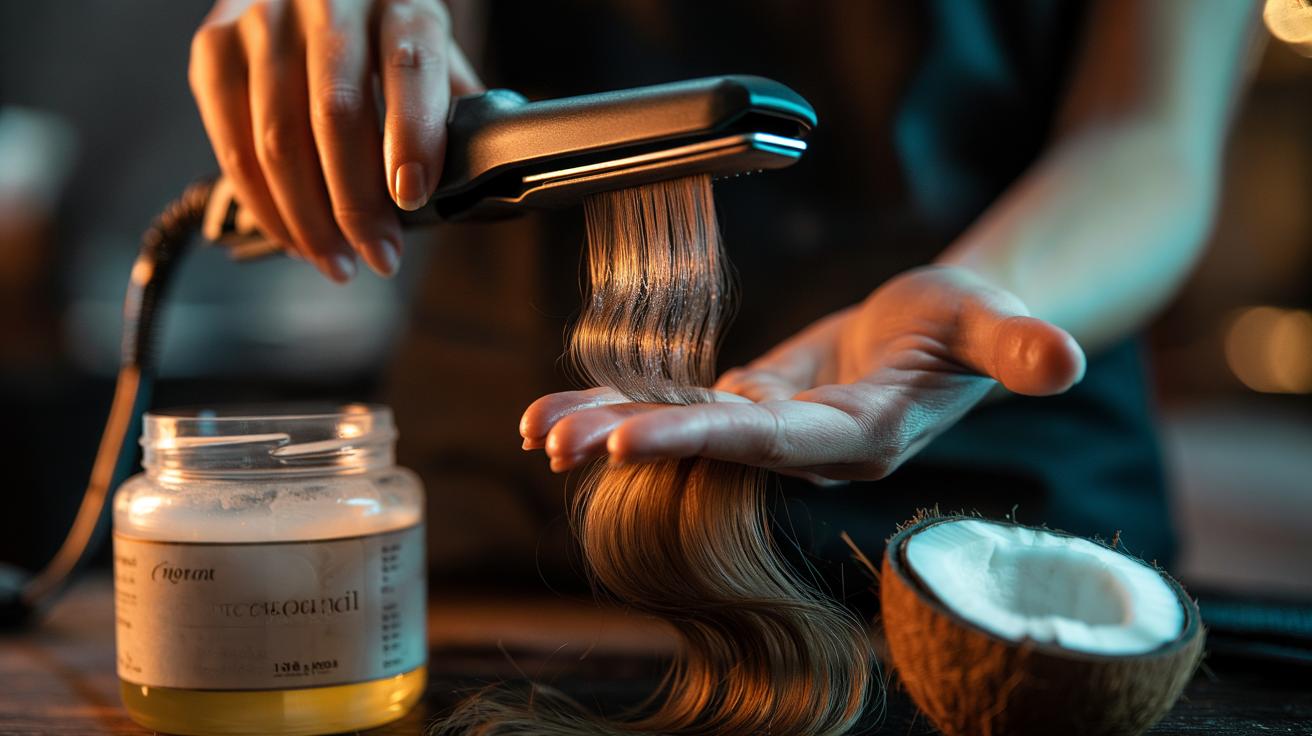
There’s a thriving salon whisper that coconut oil used before a flat iron can block up to 90% of heat damage. The idea isn’t magic; it’s materials science. Coconut oil’s lauric-acid‑rich profile is unusually compatible with the hair fibre, slipping into spaces that many oils can’t and forming a thin, hydrophobic film that behaves much like silicones. That film reduces friction, moderates moisture movement, and tamps down hot spots at the plate–strand interface. The trick is using a micro‑dose and pristine technique. Below, we unpack the chemistry that makes it work, the conditions behind that headline figure, and the exact method professionals use to get glassy results without frying the cuticle.
Why Coconut Oil Behaves Like Silicone on Hair
Coconut oil is dominated by lauric acid (C12), a straight-chain fatty acid with a small molecular size that aligns neatly with hair keratin. That alignment allows partial penetration into the cortex while leaving a surface film that is distinctly hydrophobic. The result: reduced water uptake, lower swelling, and less friction between cuticle scales during high-temperature passes. This is strikingly similar to the way dimethicone and other silicones act—by creating a low-surface-energy coating that improves slip and gloss. In practical terms, it cushions hair from mechanical and thermal stress.
There are differences. Silicones remain largely external and highly heat-stable, while coconut oil has a smoke point around 175–180°C and can slowly volatilise. Used correctly, the oil’s thin film smooths the pathway for the flat iron, distributing heat more evenly and preventing micro-singeing. The key is restraint: too much oil insulates unevenly and invites sizzling. A whisper of product mimics silicone-like coating without the heavy build-up some users experience with persistent silicone use.
The Science Behind the ‘90% Heat Damage’ Claim
“Up to 90%” is best understood as a lab-context figure. In controlled tests on treated tresses, very light pre‑treatments that reduce water content and friction show dramatic reductions in protein loss and cuticle lift compared with untreated hair exposed to the same heat. Coconut oil’s affinity for keratin helps limit swelling and steam-driven bubble formation—two pathways to catastrophic damage. When water in hair flashes to steam under a plate, structural ruptures follow; coconut oil’s film slows vapour movement and lowers shear forces.
Yet percentages vary with temperature, pass count, contact time, hair porosity, and baseline condition. Results approaching that headline number arise when oil is used on fully dry hair, in micro-quantities, and at moderated temperatures. Expect more modest protection if hair is high-porosity, over‑processed, or the iron runs above 200°C. Numbers are condition‑specific, not a universal guarantee. Think of coconut oil as a friction-and-moisture manager that can rival silicone-like protection when technique is disciplined.
How to Use It Before a Flat Iron
Start with clean, fully dried hair. Warm a rice-grain amount (0.2–0.5 ml for shoulder length) of virgin coconut oil between palms until clear and ultra‑sheer. Glide from mid‑lengths to ends, then comb to distribute. You want a micro‑film, not shine at the roots. Do not flat‑iron over damp hair—water vapour amplifies damage. If strands feel slick, blot lightly with a tissue; residue should be imperceptible.
Set the iron between 170–185°C for fine/medium hair and 185–200°C for coarse textures, using slow, single passes. Work in small sections, keeping plates clean to avoid hot spots. For dyed or highly porous hair, consider a hybrid: a featherweight spray heat protectant for film-formers plus the coconut oil micro‑film for friction control. Apply the thinnest possible layer—protection comes from coverage uniformity, not thickness. Finish with a cool brush‑through to settle cuticles and lock in shine.
Coconut Oil vs. Silicones: Pros, Cons, and Who Should Use Which
Both create a protective film, but they behave differently. Coconut oil partially penetrates and can reduce protein loss, making it appealing for porous or curly hair prone to swelling. It’s light, inexpensive, and biodegradable, though it can smoke if overused at high heat. Silicones like dimethicone are highly stable at styling temperatures, deliver dramatic slip, and excel at smoothing rough cuticles—but they may require surfactant‑rich shampoos to remove and can weigh down fine hair. Select based on hair type, heat level, and wash routine.
For minimal build-up and a natural finish, coconut oil wins—especially when heat stays below 200°C and technique is meticulous. For frequent high‑heat styling or extremely coarse, refractory cuticles, a tailored silicone blend may be the pragmatic choice. Many professionals layer sparingly: a light silicone spray for uniform coverage plus a micro‑film of coconut oil for internal cushioning. The smartest plan is the one you can execute consistently without residue or over‑drying.
| Property | Coconut Oil | Dimethicone (Silicone) |
|---|---|---|
| Primary Action | Hydrophobic film + partial penetration | External occlusive film with high slip |
| Heat Behaviour | Can smoke above ~180°C; requires micro‑dose | Stable at common styling temps; resilient film |
| Build‑Up | Low; removes with mild shampoo | Moderate; often needs stronger surfactants |
| Best For | Porous, curly, or fine hair needing light feel | Coarse or highly frizzy hair needing maximum slip |
Used with care, a coconut oil micro‑film before the flat iron can imitate silicone’s coating benefits and, in optimal conditions, approach that “90% less damage” benchmark. The secret is precision: ultra‑thin application, fully dry hair, clean plates, and temperatures matched to texture. When coverage is even and heat is controlled, hair stays smoother, shinier, and structurally calmer. If your routine leans hotter or heavier, a silicone‑forward protector may suit you better—or consider a hybrid. How will you tailor your next heat‑styling session to balance protection, finish, and ease of maintenance?
Did you like it?4.6/5 (29)