In a nutshell
- 🍬 The flat cola rinse boosts limp hair by forming a light sugar film that increases friction and texture, while the drink’s low pH smooths the cuticle for instant volume.
- 🧴 How-to: use regular (not diet) cola, de-gas it, and dilute 1:2 (cola:water); apply to towel-dried hair, scrunch, then air-dry or diffuse lightly—keep application sheer to avoid stickiness.
- 🧪 Science notes: straight cola is ~10% sugar and ~pH 2.5; dilution brings it to ~3–3.5% sugar and a gentler pH; the sugar film is water-soluble, reactivates with misting, and washes out with mild shampoo.
- ⚠️ Safety and suitability: ideal for fine, limp hair; works on straight to wavy and loose curls; be cautious on sensitive scalps or bleached hair; discard mixes after 24 hours and rinse before bed to prevent residue.
- 💡 Practical tips: add a drop of lavender/rosemary hydrosol for scent, clarify weekly if needed, and remember no sugar = no grip (skip diet cola); think “veil not varnish” for best results.
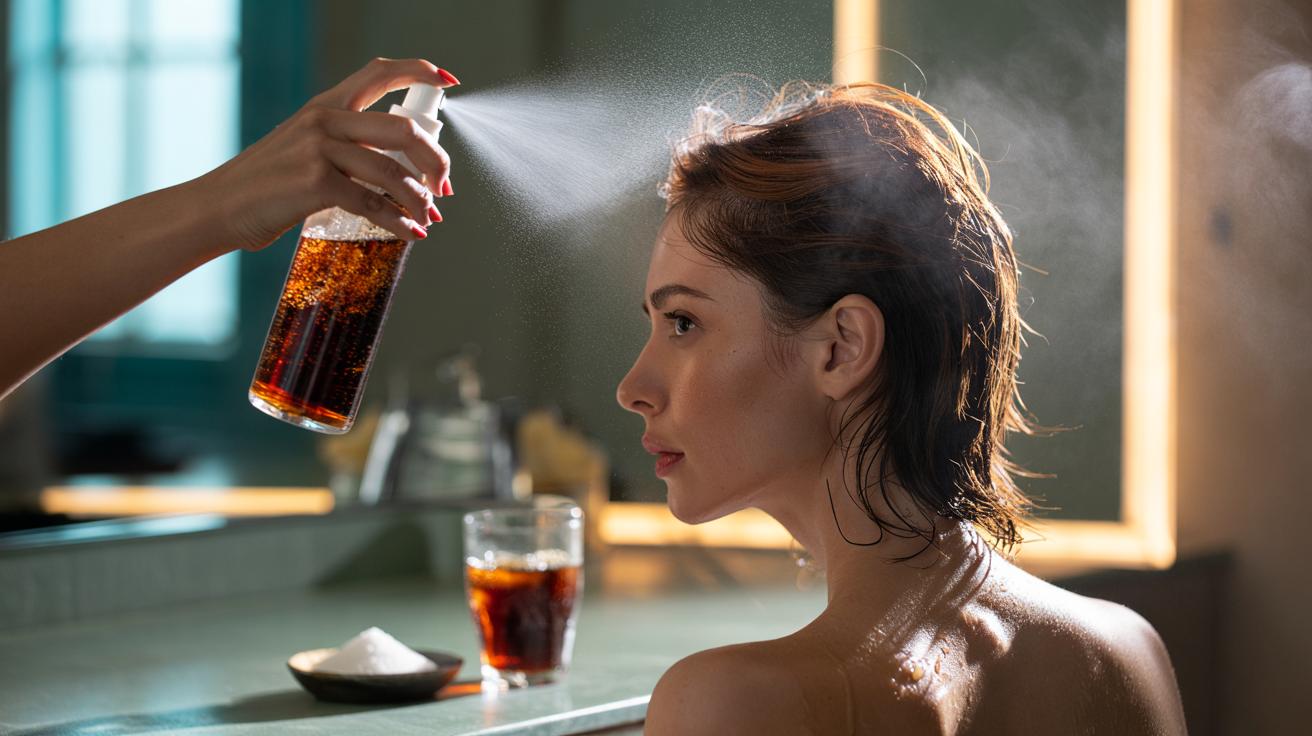
British bathrooms have a new, oddly satisfying hack: the flat cola rinse. It sounds like mischief, yet stylists swear by the instant lift and texture it gifts to lifeless roots. The trick lies not in fizz but in the sugar, which creates a lightweight film that coaxes strands apart and adds tactile “grip”. Used sparingly, it can mimic the effect of a professional texturising spray for a fraction of the price. There are caveats—acidity, stickiness, and the possibility of residue—but handled with care, cola can be a handy stopgap when hair refuses to play. Here’s how it works, how to try it safely, and when to pass.
Why Flat Cola Works for Volume
Cola contains around 10–11 g of sugar per 100 ml. Those sucrose, glucose, and fructose molecules cling to the hair’s keratin surface via hydrogen bonds, forming a micro-thin film. That film increases friction between strands, so hair doesn’t collapse into a slick, limp sheet. The result is immediate texture, extra “grip” for styling, and perceptible volume at the roots. It’s essentially a DIY styling polymer, delivered by a soft drink.
Because you de-gas the drink first, the fizz isn’t the hero. The acidity, however, contributes. Cola’s low pH helps tighten the hair cuticle, making strands lie smoother without adding weight. Smooth on the surface, grippy at the touch: that balance is why the rinse feels different to salt sprays. Important note: caffeine content is too small to move the needle on hair behaviour; the lift comes from the sugar film and pH, not the buzz.
How to Do a Flat Cola Rinse at Home
Diet or zero cola will not texturise—no sugar, no film. Choose a regular cola. Decarbonate it by stirring briskly for a minute or leaving it open until the bubbles fade. For an everyday-friendly mix, dilute 1 part flat cola with 2 parts water; this keeps the sugar concentration in a manageable range and softens the acidity. Work on freshly washed, towel-dried hair: pour the mixture over mid-lengths and roots, then scrunch. Avoid soaking the scalp if you’re prone to irritation.
Let hair air-dry, or diffuse on low heat while lifting at the crown for extra height. If it feels tacky once dry, mist with a little water and scrunch again to soften the film. Keep application light—think “veil”, not “varnish”. To manage scent, add a drop of lavender or rosemary hydrosol to the mix. Make it fresh each time and bin leftovers after 24 hours. A quick rinse before bed prevents residue build-up and keeps pillowcases safe from stickiness.
The Science: Sugar, Film Formation, and pH
Styling products rely on polymers to hold micro-shape. Here, sugar plays that role, creating a fast-forming, water-soluble film that grips fibres. Professional sugar sprays often target 2–5% sugar by weight. Straight cola sits near 10%, which can feel crunchy or attract dust. Dilution is your friend: it moderates tack, improves spread, and reduces excess acidity. Hair is happiest near pH 4.5–5.5. Cola is typically around pH 2.5; dilution edges it closer to comfortable territory, especially with brief contact times.
| Mix | Approx. Sugar % | Estimated pH | Expected Feel |
|---|---|---|---|
| Undiluted cola | ~10% | ~2.5 | Strong grip, risk of crunch, sticky residue |
| 1:1 cola:water | ~5% | ~3.0–3.3 | Noticeable texture, moderate hold, some tack |
| 1:2 cola:water | ~3–3.5% | ~3.3–3.7 | Light grip, softer feel, better for daily use |
Keep contact times short and focus on lengths. The sugar film is easily reactivated with water and washes out cleanly with a mild shampoo. If hair feels dull after repeated use, a clarifying wash once a week resets the canvas without stripping colour. Remember: the goal is a whisper of film, not a syrupy coat.
Safety, Hair Types, and Smell Control
Fine, limp hair gains most from a cola rinse because a small boost in friction translates into visible lift. Straight to wavy textures see quick wins; loose curls can use it to amplify definition. Very coarse or tightly coiled hair may prefer magnesium sulphate or professional sugar sprays that layer more predictably. Chemically lightened or fragile hair should stick to the 1:2 dilution and apply on mid-lengths to ends, keeping the scalp clear if sensitive.
There are limits. Avoid applying on broken skin or irritated scalps. On hot days, the sweetness can attract insects—best used indoors and rinsed before bed. Prepare in small batches and discard after 24 hours to sidestep microbial growth. If you notice stiffness, reset with a gentle clarifying shampoo and follow with a pea-sized amount of conditioner on the ends only. For smell control, spritz a light citrus hydrosol after drying; it masks cola notes without collapsing volume. A silk pillowcase helps preserve the lift overnight.
The flat cola rinse sits at the sweet spot between kitchen experiment and newsroom curiosity: cheap, cheerful, and—done right—surprisingly effective. The sugar film adds instant texture, the mild acidity smooths the cuticle, and the end result is hair that behaves as though it belongs in a blow-dry bar. Use a light touch, dilute smartly, and rinse before sleep. For a workday lift or pre-event zhuzh, it’s a nifty stand-in for a bottle of texture spray. Will you try a measured splash of flat cola on your next limp-hair day, or does your toolkit already have a go-to trick that beats it?
Did you like it?4.8/5 (27)