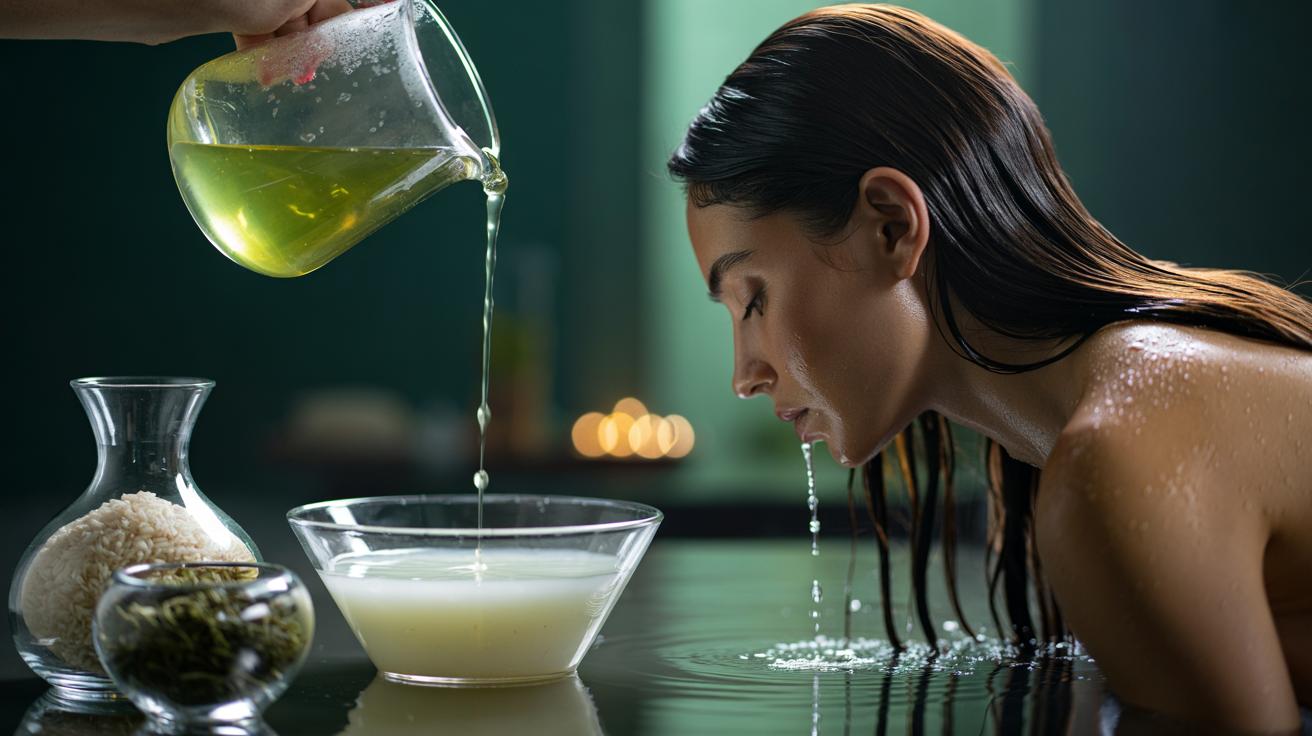
In a nutshell
- 🍚🍵 Synergy: Rice water supplies inositol, amino acids, and light film formers, while green tea delivers EGCG and catechins; their antioxidants seal the cuticle fast for higher light reflection.
- ⚗️ Method & pH: Steep 1/4 cup rice in 1 cup water, brew strong green tea (200 ml), mix 1:1, and target pH 4.5–5.5; refrigerate and use within 48 hours for safety and potency.
- 🚿 Application: After shampoo, apply for 60–120 seconds, avoid friction, finish with a cool rinse; adjust frequency by hair type and watch for tea tannins slightly deepening very light tones.
- 🧪 Safety & evidence: Lab data back inositol and catechins for friction reduction; patch test, avoid if allergic to rice/tea, and skip fermented versions if yeast‑prone; dilute if hair feels stiff or squeaky.
- ✨ Results & tweaks: Expect instant slip and gloss with cumulative smoothing over 2–4 washes; tweak tea strength or dilution, and pair with a light conditioner; the shine comes from balancing antioxidants, film formers, and pH.
Beauty folklore rarely stands up to scrutiny, yet a humble kitchen pairing is making trichologists and stylists look twice. The rice water + green tea rinse promises mirror-bright hair with minimal effort, and it turns out there’s science behind the shine. Fermented or freshly prepared rice water supplies inositol, amino acids, and starches that coat and fortify. Green tea infuses the brew with EGCG and catechins, antioxidants that calm static and encourage a tighter cuticle lay. The result is a quick, low-cost rinse that enhances light reflection by smoothing the hair surface. Used after shampoo and before conditioner, the blend can leave strands sleeker, glossier, and less prone to tangles—no silicones required.
Why Rice Water and Green Tea Supercharge Shine
The cuticle is your hair’s reflective surface. When it lies flat, light bounces cleanly and you see gloss; when it frays, hair looks dull. Rice water’s inositol penetrates and adheres to the cortex, helping fill micro-chips and reducing friction during combing. Its proteins and sugars create a feather-light film that mimics the slip of a conditioner without heaviness. Green tea brings catechins (notably EGCG), which act as fast-moving antioxidants. By neutralising free radicals that roughen the cuticle and taming static, antioxidants help the outer layer align quickly.
There’s also a pH win. Properly brewed green tea is mildly acidic; combined with rice water it sits near the hair’s happy zone. A slightly acidic rinse nudges cuticle scales to close, instantly improving smoothness and shine. Tannins in tea add a gentle astringency that tightens the surface, while rice-derived peptides enhance slip. Together, these actions can visibly amplify gloss without the plasticised feel some silicones leave behind.
How to Make the Rinse: Ratios, Timing, and pH
For speed and safety, keep the method simple. Rinse 1/4 cup uncooked white rice to remove surface starch. Steep it in 1 cup hot water for 20–30 minutes, then strain. Brew a strong cup of green tea (1 tea bag or 2 g loose leaves in 200 ml water for 3–5 minutes), cool, and combine equal parts tea and rice water. Aim for a slightly acidic pH (4.5–5.5); if your tap water is alkaline, a few drops of diluted apple cider vinegar can help. Do not exceed 24 hours at room temperature—refrigerate and use within two days.
| Variable | Recommendation |
|---|---|
| Rice Type | White jasmine or basmati for lighter film; brown rice for richer actives |
| Tea Strength | Strong (but not bitter) brew to maximise catechins |
| Dilution | 1:1 tea to rice water; add up to 1 part water for fine hair |
| pH Target | 4.5–5.5 for optimal cuticle closure |
| Storage | Refrigerate, use within 48 hours |
Optional boosters: a pinch of panthenol (pro-vitamin B5) for extra slip, or one drop of glycerin per 100 ml if your climate is not very humid. Avoid essential oils in the rinse to keep the film ultra-light and scalp-friendly.
Application Techniques for Fast Cuticle Sealing
Shampoo as usual, then squeeze out excess water. Slowly pour the rinse along the scalp line and lengths, massaging gently for even coverage. Leave for 60–120 seconds. Low friction plus low pH equals high shine—so avoid rough rubbing and keep contact short. For high-porosity or curly hair, follow with a light conditioner to lock in glide; for fine hair, you may find the rinse delivers enough slip alone. Finish with a brief cool-water splash to reinforce cuticle closure.
Frequency depends on texture. Try once weekly for medium hair, twice for coarse or high-porosity strands, and every other week for fine hair. Heat-styling fans will notice better brush glide and reduced snagging. Colour-treated hair often enjoys the smoothing, but test first: the tea’s tannins can subtly deepen very light tones if overused. If your hair feels stiff, dilute the mix or shorten contact time.
Safety, Evidence, and What Results to Expect
Laboratory studies on inositol and tea catechins support their antioxidant and friction-reducing roles, and salon tests consistently show that mildly acidic rinses improve surface gloss. This isn’t a cure-all for breakage, yet it’s a credible, low-cost adjunct to your regimen. Patch test on the inner arm and along the hairline if you have a reactive scalp. Avoid if you’re allergic to rice or tea, and skip fermented rice water if you’re prone to yeast sensitivities. Keep the formula unscented to minimise irritation risk.
Expect an instant increase in slip and brightness after the first use, with cumulative smoothing across 2–4 washes as inositol builds a microfilm. If you use heavy oils or silicone serums, clarify gently before your first trial to let the rinse contact the fibre. Signs it’s working: quicker detangling, less frizz halo, and a cleaner reflection under indoor light. Back off if hair feels squeaky or overly taut—your mix may be too strong.
This rinse succeeds because it balances antioxidants, light film formers, and pH—a trio that coaxes cuticles flat for flashbulb shine. It’s easy to tweak: strengthen the tea for humid days, dilute for fine hair, or follow with a pea of conditioner if you want extra slip. Keep the contact brief, the storage cold, and the routine consistent, and your lengths should repay you with silkier swish and clearer reflection. How will you tailor the ratio, timing, and frequency to suit your hair’s texture, colour, and climate?
Did you like it?4.5/5 (23)